
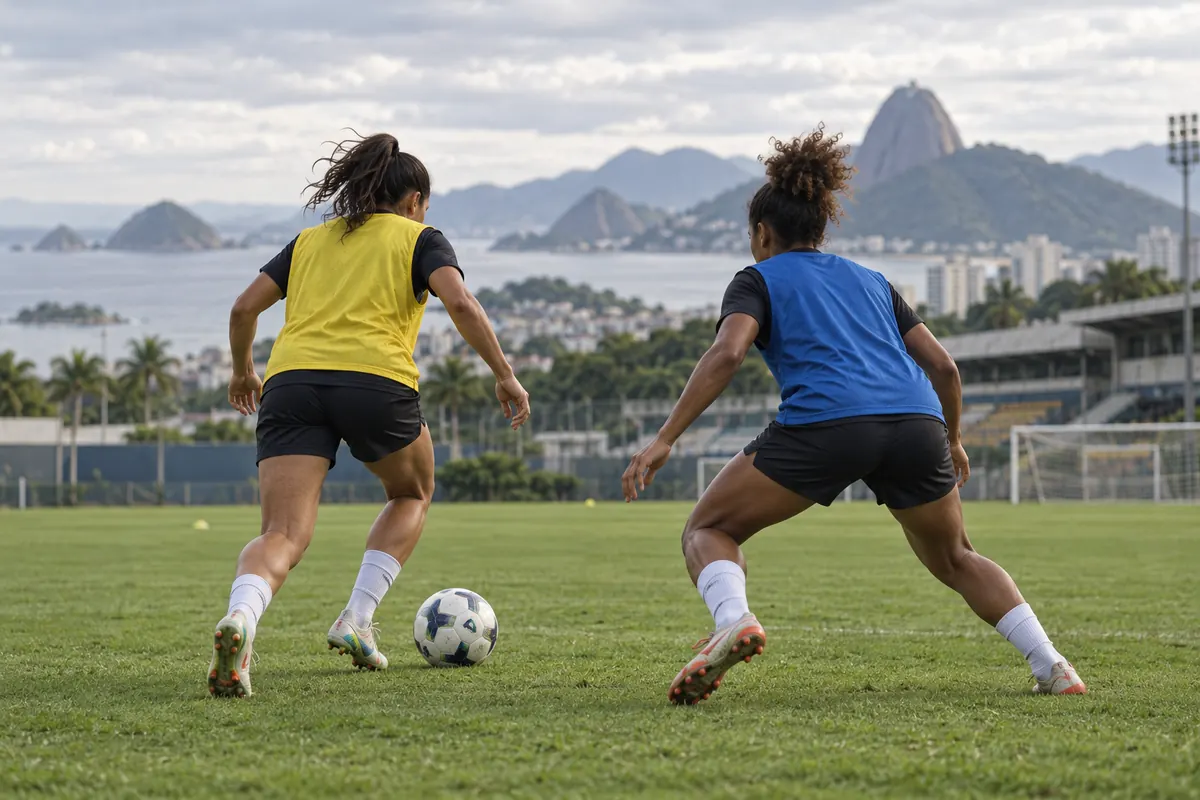
The Women’s World Cup 2027 is scheduled for 24 June to 25 July in Brazil, with a December draw set to give the tournament’s groups a clearer shape. For fans beginning to plan, the key is separating confirmed tournament information from individual fixtures and kick-off times that still need to be checked.
- FIFA has confirmed the tournament’s opening and final dates.
- The final draw is scheduled for 11 December 2026 in Rio de Janeiro.
- The competition will feature 32 teams across eight Brazilian host cities.
When will the tournament take place?
FIFA’s Council announcement confirming the dates sets out the 24 June start and 25 July finish. That gives supporters a reliable tournament window without implying that every team’s path is already settled.
It is worth treating those two dates as the outside edges of a plan. A supporter who wants to follow one national team needs more detail than someone choosing a single city and watching whichever matches arrive there. Decide which type of trip or viewing schedule you want before attaching a budget to unconfirmed assumptions.
What happens at the December draw?
In its final-draw announcement, FIFA names Friday 11 December 2026 and Rio’s Museum of Modern Art as the date and venue. The draw will establish the groups and tournament pathways. FIFA says an updated match schedule will follow, assigning group-stage games to host cities and confirming kick-offs.
That sequence matters. The draw provides the competitive map; the published schedule turns it into a practical timetable. A graphic predicting attractive pairings is not the same thing as an official fixture. Save the organiser’s schedule after it is released and check it again if you make plans much later.
Eight host cities, different planning choices
FIFA’s one-year countdown update lists Belo Horizonte, Brasília, Fortaleza, Porto Alegre, Recife, Rio de Janeiro, Salvador and São Paulo. The same update describes 64 matches, while the draw announcement confirms the 32-team field.
| Detail | Confirmed information |
|---|---|
| Tournament dates | 24 June–25 July 2027 |
| Final draw | 11 December 2026, Rio de Janeiro |
| Field and programme | 32 teams, 64 matches, eight host cities |
The number of host cities also creates a simple editorial point: following a tournament is not just about a stadium list. Once team allocations are known, compare the time between fixtures with the places involved. Do the practical work after the schedule is clear rather than assuming that every match can fit neatly into the same trip.
How the remaining places are decided
FIFA’s Council announcement describes 29 direct places and three further places decided through its play-off tournament. Brazil’s automatic host berth is part of South America’s allocation. Qualification therefore remains a separate process from drawing the finals groups.
A useful reading habit is to check the status beside a team’s name. Has it qualified, is it still in a qualifying competition, or does a draw position represent a future play-off winner? Those distinctions prevent a tentative bracket from being mistaken for a confirmed team list. This guide does not guess the eventual participants.
What fans should do next
Bookmark FIFA’s tournament information and wait for the post-draw schedule before treating individual match plans as fixed. Check the timezone on every kick-off and consult the official ticket channel for current availability; no ticket price or broadcast package is assumed here.
Our view is that the most useful preparation now is modest: save the dates, choose what you want to follow, and keep one reliable place for updates. Visit KoooraScores football news for competition explainers and use the competition directory to explore the rest of the football calendar.
Facts checked: 21 October 2026. Later FIFA announcements may update the schedule, draw arrangements or ticket information.