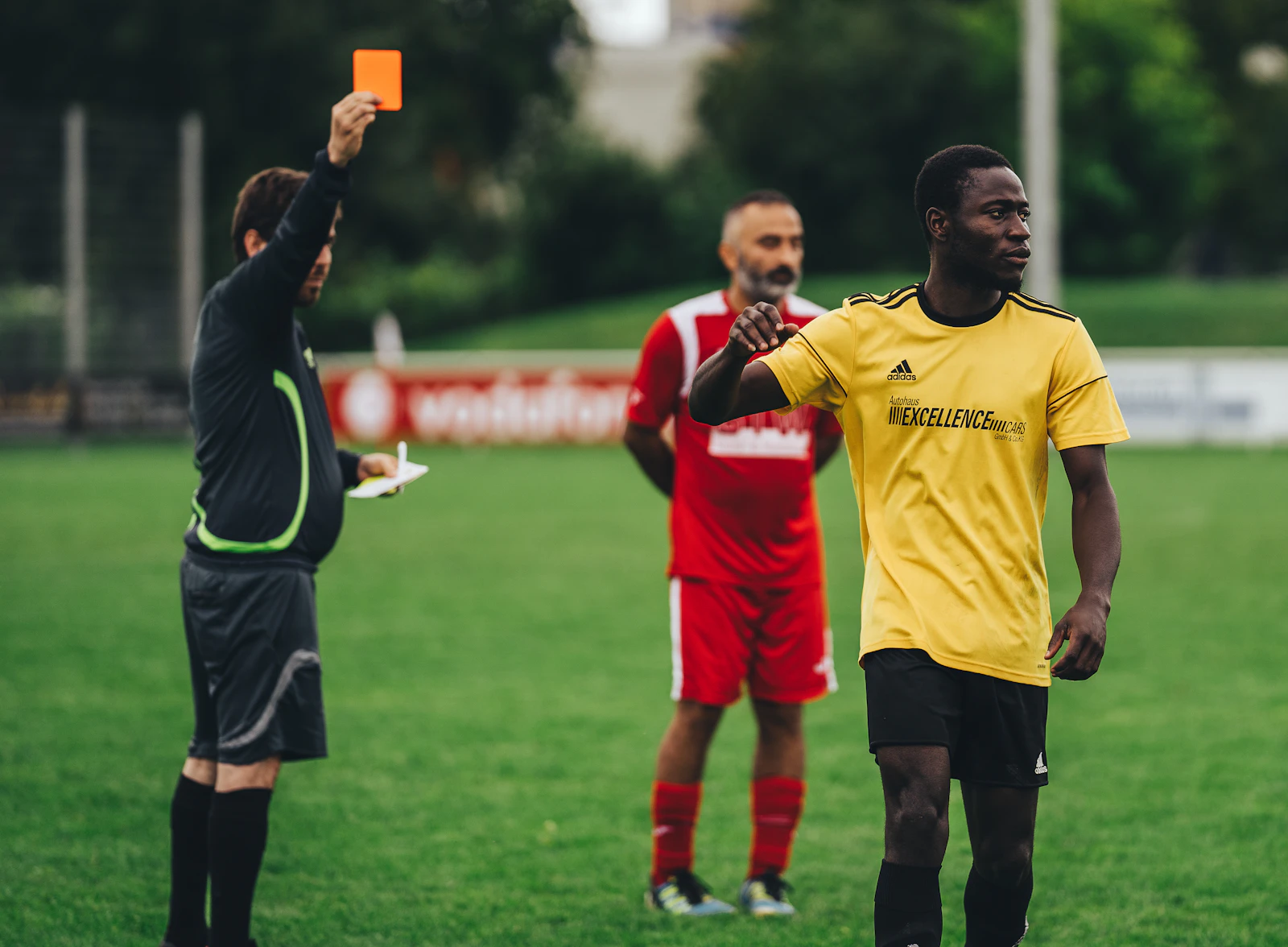
VAR is a video assistant referee who helps the on-field referee with specified important decisions. It is not a second referee who re-officiates every tackle. A check can happen without a stoppage, and a pitchside review does not guarantee that the original decision will change.
The limits also evolve. Advice saying that VAR can never examine a second yellow card is out of date for the 2026/27 Laws.
- The on-field referee keeps the final decision.
- Checks and on-field reviews are different stages.
- The current framework includes clearly incorrect second cautions resulting in dismissal.
- Reviews of clearly incorrectly awarded corners are a competition option with strict timing limits.
Which decisions can VAR review?
The main categories concern goals, penalties, red cards and mistaken identity. A goal check may include an attacking offence in the build-up, rather than only the final touch. Penalty decisions include both an award that should not stand and a possible offence that was missed.
Not every disagreement reaches the intervention threshold. For subjective incidents, the system looks for a clear and obvious error or a serious missed incident within its permitted scope. Having a different preference after several replays is not automatically enough.
What changed for second yellow cards and corners?
Under the 2026/27 changes, a red card caused by a clearly incorrect second yellow card can be reviewed. That does not allow VAR to search for every missed caution: IFAB specifically distinguishes an incorrectly shown second yellow from a potential second-yellow offence the referee missed.
Competitions may also allow correction of a clearly incorrectly awarded corner, provided it can be done immediately without delaying the restart. It is an option, not permission to stop every match for a lengthy corner-kick investigation. Once a quick corner is taken, that restart decision cannot simply be rewound.
What is the difference between a check and a review?
A check is the video team examining a relevant incident. Many checks end silently because there is no basis to intervene. A review is the formal reconsideration of a decision; it may involve the referee watching the pitchside monitor.
For a supporter, a useful sequence is: identify the incident, wait to learn what is being checked, then wait for the referee’s decision. A graphic saying “checking penalty” describes an assessment in progress, not confirmation that a penalty will follow.
Why show both slow motion and normal speed?
A close replay can help locate contact, while normal speed shows the action’s intensity and movement. UEFA’s recommended monitor sequence combines identification, technical assessment, wider normal-speed context and a conclusive image supporting the decision.
A photograph of studs touching a leg can be important evidence, but it cannot by itself tell the whole story of a moving challenge. Looking at the build-up and the action at match speed helps explain why the monitor sequence contains more than one angle.
Who decides, and why can a review take time?
The referee makes the final call, using the video team’s information or an on-field review. VAR supplies evidence and assistance rather than an independent final verdict that replaces the referee.
The protocol prioritises accuracy and does not set a universal maximum review time. When following our live scores, treat an incident marked under review as provisional. The added-time guide explains why review delays can affect the clock.
VAR FAQs
Does VAR check every ordinary free kick? No. It operates within defined categories, although an earlier offence can matter when assessing a reviewable incident.
Can the referee keep the original decision after visiting the monitor? Yes. Viewing the replay does not require a change.
Does every competition use identical technology and options? No. Check the tournament’s approved implementation and any optional provisions.
Official sources
- IFAB: current VAR protocol
- IFAB: 2026/27 changes and explanations
- FIFA: video assistant referee system
- UEFA: standardised monitor-review process
Checked on 8 November 2026 against the 2026/27 framework. Competition options and future amendments can change implementation.