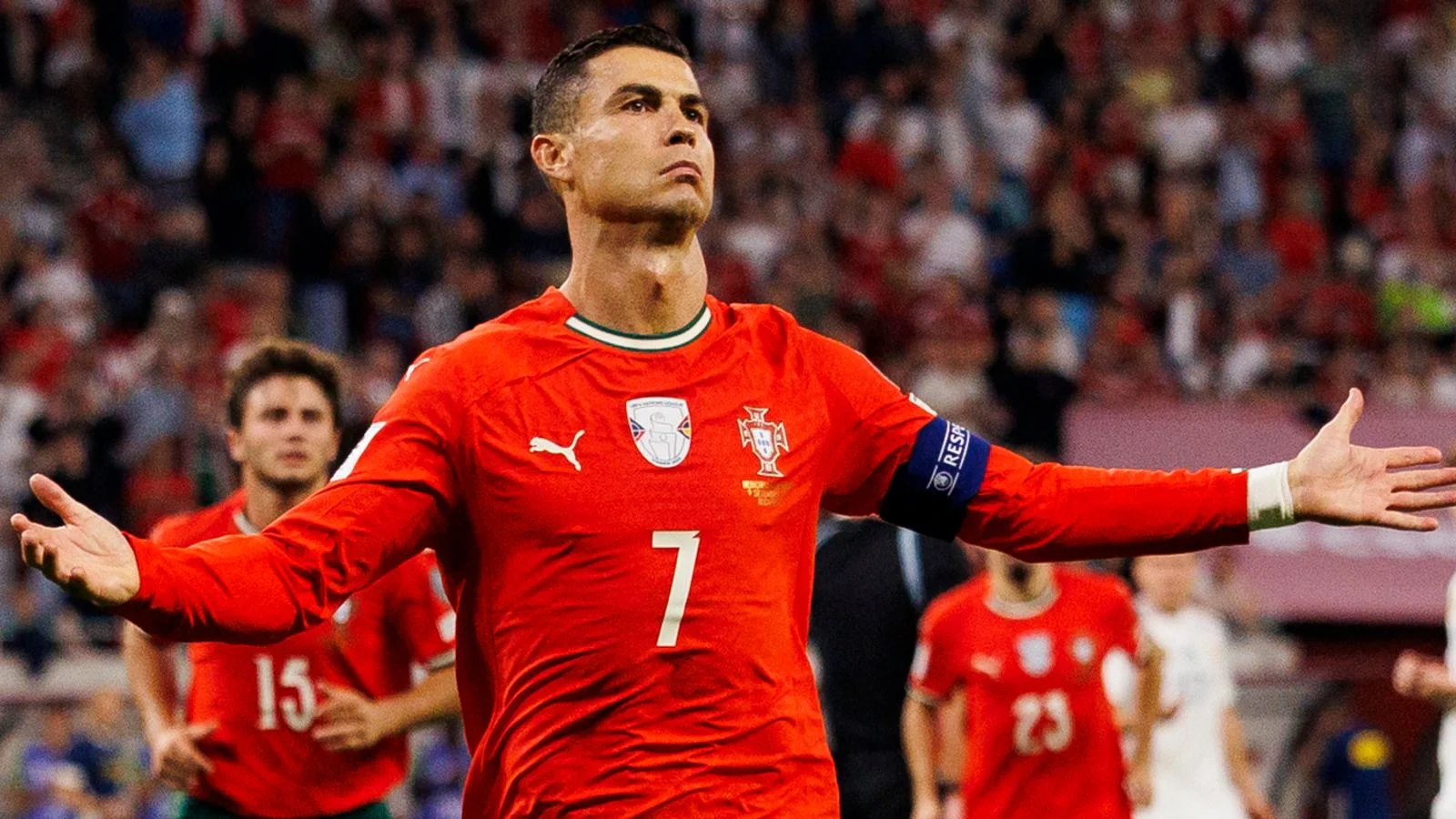
When the final whistle blew at AT&T Stadium in Arlington, Texas, on Monday evening, Cristiano Ronaldo did not collapse to the turf in tears as he had in Doha three and a half years earlier. He did not rage at the referee or gesture to the heavens. He simply stood, hands on hips, and watched the Spanish players celebrate a 1-0 victory that had ended Portugal's World Cup campaign — and, with it, his own two-decade love affair with the tournament.
At 41 years and 160 days old, Ronaldo had just played his final World Cup match. The goal that condemned him, a 91st-minute header from Mikel Merino, was cruel in its timing and devastating in its consequence. But Ronaldo had known this moment was coming. He had said before the match that the 2026 tournament would be his last. The only question was how it would end.
It ended, as it had so many times before, with Portugal falling short of the ultimate prize. But to judge Ronaldo's World Cup legacy solely by the absence of a trophy is to miss the point entirely. Over six tournaments spanning 20 years — from a fresh-faced 21-year-old in Germany to a living legend in North America — Ronaldo redefined what longevity and excellence look like on football's biggest stage. He became the first man to score in six different World Cups. He became Portugal's all-time leading scorer at the tournament. He played more World Cup minutes than any European in history.
Ronaldo's World Cup Career in Numbers
Tournament by Tournament: The Full Story
Germany — The Prodigy Arrives
A 21-year-old Ronaldo announced himself on the global stage with six appearances and one goal, helping Portugal reach the semi-finals for the first time since 1966. His penalty in the shootout against England was a glimpse of the clutch mentality that would define his career. Portugal finished fourth — Ronaldo's best World Cup result.
South Africa — The Weight of Expectation
By 2010, Ronaldo was the reigning Ballon d'Or winner and Portugal's undisputed talisman. But the tournament was a disappointment. He scored just once — a deflected strike against North Korea — and Portugal were eliminated in the Round of 16 by a Spain side that would go on to win the trophy. It was the beginning of a pattern: Ronaldo's individual brilliance was not enough to carry Portugal past the continent's elite.
Brazil — The Injury-Hampered Campaign
Ronaldo arrived in Brazil carrying a knee injury that had plagued his final season at Real Madrid. He managed one goal and one assist in three appearances, but Portugal failed to advance from a group containing Germany, USA, and Ghana. A 4-0 opening defeat to Germany effectively ended their campaign before it had begun. For Ronaldo, it was a tournament of frustration — his body betraying him when his country needed him most.
Russia — The Hat-Trick for the Ages
This was Ronaldo's World Cup masterpiece. His hat-trick in a 3-3 draw against Spain — including a late free-kick of breathtaking audacity — is widely regarded as one of the greatest individual performances in World Cup history. At 33, he became the oldest player to score a World Cup hat-trick. He added another goal against Morocco, but Uruguay ended Portugal's campaign in the Round of 16. Four goals in four games: his most prolific tournament.
Qatar — The Bitter End
Ronaldo became the first male player to score at five World Cups with a penalty against Ghana. But the tournament was defined by controversy: his fractured relationship with manager Fernando Santos, his demotion to the bench for the Round of 16 thrashing of Switzerland, and his tears after the quarter-final defeat to Morocco. At 37, it seemed certain to be his final World Cup. He wrote on Instagram that the dream had ended. It hadn't.
USA, Mexico & Canada — The Final Chapter
At 41, Ronaldo returned for one last dance. He scored twice against Uzbekistan to become the first player to score in six different World Cups, surpassing Eusébio's Portugal record of nine goals. He converted his first-ever World Cup knockout goal from the penalty spot against Croatia. But Spain's late winner in the Round of 16 brought the curtain down. Twenty years after his first World Cup goal against Iran, his last came against Croatia. The circle was complete.
The Records That Will Stand Forever
Ronaldo is the only player in history to find the net in six different editions of the tournament (2006, 2010, 2014, 2018, 2022, 2026). A record of longevity that may never be equalled.
He surpassed Eusébio's record of nine World Cup goals for Portugal with his brace against Uzbekistan in 2026. No Portuguese player has ever scored more on this stage.
Only Lionel Messi (30) has played more World Cup matches. Ronaldo's 27 appearances span two decades and five different managers.
At 41 years and 138 days, Ronaldo became the oldest player in World Cup history to score a brace — against Uzbekistan in June 2026.
His first World Cup goal came against Iran in June 2006. His last came against Croatia in July 2026. No player has ever scored across such a vast expanse of time.
Ronaldo retires with 146 goals for Portugal — the most by any male player in international football history. The World Cup contributed 11 of them.
The Numbers: Tournament-by-Tournament Breakdown
| Tournament | Age | Apps | Goals | Assists | Portugal's Finish |
|---|---|---|---|---|---|
| 2006 Germany | 21 | 6 | 1 | 0 | 4th place |
| 2010 South Africa | 25 | 4 | 1 | 1 | Round of 16 |
| 2014 Brazil | 29 | 3 | 1 | 1 | Group Stage |
| 2018 Russia | 33 | 4 | 4 | 0 | Round of 16 |
| 2022 Qatar | 37 | 5 | 1 | 0 | Quarter-finals |
| 2026 USA/Mexico/Canada | 41 | 4 | 3 | 0 | Round of 16 |
| Career Total | — | 27 | 11 | 2 | Best: 4th place (2006) |
The Knockout Curse
For all his group-stage brilliance, Ronaldo's World Cup knockout record was a source of frustration throughout his career. Until the 2026 tournament, he had never scored in the knockout phase of the competition — a remarkable statistic for a player who has found the net in virtually every other high-stakes environment imaginable. His ten pre-2026 goals all came in group-stage matches.
That drought finally ended on July 2, 2026, when he converted a penalty against Croatia in the Round of 32. At 41 years and 147 days, he became the oldest player to score in a World Cup knockout match. It was a moment of catharsis — the release of two decades of accumulated pressure. But the relief was short-lived. Spain awaited, and Merino's late header ensured that Ronaldo's first knockout goal would also be his last.
The broader pattern is unmistakable: Portugal reached the semi-finals only once in Ronaldo's six tournaments, and never progressed beyond the quarter-finals in his final four appearances. For a player who won five Champions League titles, two international trophies (Euro 2016 and the Nations League), and countless domestic championships, the World Cup remained the one mountain he could not summit.
What Ronaldo Leaves Behind
Ronaldo's international legacy extends far beyond the World Cup. With 146 goals in a Portugal shirt, he is the most prolific male international goalscorer in history. He won Euro 2016, scoring three goals and providing two assists en route to the final, where he was forced off early through injury but famously acted as an inspirational touchline general. He lifted the inaugural Nations League in 2019 and a second edition in 2025. He has played in more major tournaments than any European player in history.
But it is the World Cup that defines — and, in some eyes, diminishes — his legacy. The debate between Ronaldo and Lionel Messi has consumed football discourse for nearly two decades, and Messi's 2022 World Cup triumph with Argentina gave him an argument that Ronaldo, for all his other achievements, cannot counter. The absence of a World Cup winner's medal is the single gap in a CV that otherwise reads like a catalogue of superlatives.
Yet to reduce Ronaldo's legacy to what he did not win is to ignore what he did. No player has ever scored across six World Cups. No European has played more minutes. No Portuguese has come close to his goal tally. He carried his nation's hopes from the age of 21 to the age of 41, through six tournaments, five managers, and countless team-mates. That alone is a legacy of staggering proportions.
"To win a World Cup for Portugal was the biggest and most ambitious dream of my career. In my five appearances at World Cups over 16 years, always playing alongside great players and supported by millions of Portuguese, I have given my all. I'll never shrink from a battle and I have never given up on that dream." — Cristiano Ronaldo, December 2022
What Comes Next for Portugal?
Ronaldo's departure leaves a void that cannot be filled — but it also liberates a Portugal squad that is, by most measures, the strongest in the nation's history. Roberto Martínez can now build his attack around Gonçalo Ramos, João Félix, or Rafael Leão without the gravitational pull of Ronaldo's presence. The midfield trio of Bruno Fernandes, Vitinha, and João Neves is arguably the best in international football. The defence, marshalled by Rúben Dias, is formidable.
The question is whether Portugal can thrive without the symbol that has defined them for two decades. Ronaldo was more than a player — he was an identity, a standard-bearer, a force of will that dragged lesser teams to heights they had no right to reach. Removing that force may unlock new tactical possibilities, but it also removes the safety net of a player who, even at 41, could still produce moments of match-winning brilliance.
🏆 The Final Verdict
Cristiano Ronaldo's World Cup career was not defined by triumph, but by transcendence. He never lifted the trophy, never played in a final, and scored only once in the knockout stages. But he did something no player in history had done before: he scored across six tournaments, spanning 20 years, from the age of 21 to the age of 41. He became Portugal's greatest ever World Cup goalscorer. He played more minutes on this stage than any European who ever lived.
The World Cup may be the one missing piece of his collection, but it is not the measure of the man. Ronaldo's legacy is not a trophy cabinet — it is a testament to the power of obsession, discipline, and an almost inhuman refusal to accept decline. Six World Cups. Twenty years. One immortal career.
Key Takeaways
- Six tournaments, one unprecedented record: Ronaldo is the first and only player to score in six different World Cups (2006–2026). No one else has even scored in five.
- The knockout drought is over: After failing to score in 10 previous knockout matches, Ronaldo finally found the net in the 2026 Round of 32 against Croatia — at 41 years old.
- Portugal's greatest ever: With 11 World Cup goals, Ronaldo surpassed Eusébio's long-standing record of nine. He retires as Portugal's all-time leading scorer in the competition.
- 20 years of excellence: The gap between his first World Cup goal (vs Iran, 2006) and his last (vs Croatia, 2026) is the longest in men's World Cup history.
- The trophy that got away: Despite winning Euro 2016 and two Nations League titles, Ronaldo never won the World Cup. His best finish was fourth place in 2006.
- What next for Portugal? With Ronaldo gone, Martínez has the strongest squad in Seleção history. The question is whether they can win without their talisman.
Stay tuned to Kooora Scores for live match updates, post-match analysis, and complete coverage of the 2026 FIFA World Cup.