
November’s Women’s Champions League programme has an attractive rhythm: one round on 10–11 November, another on 18–19 November, then a pause before December’s league-phase finale. Barcelona–Arsenal, Paris Saint-Germain–Bayern and Chelsea–Paris Saint-Germain offer three clear starting points for a viewer choosing where to spend an evening. This guide separates the published schedule from our own viewing analysis.
The dates and selected fixtures
UEFA’s current fixture list supplies the dates below. Home teams appear first. These are selected matches, not every fixture in the round; check the organiser’s match page again before making plans.
| Date | Match | CET |
|---|---|---|
| 10 November | Paris Saint-Germain–Bayern | 21:00 |
| 11 November | Barcelona–Arsenal | 18:45 |
| 18 November | Chelsea–Paris Saint-Germain | 21:00 |
| 19 November | Arsenal–OL Lyonnes | 21:00 |
CET is the timezone used in UEFA’s list. Retain that label when saving a reminder, particularly if you follow from another continent. The October round on 28–29 October still comes first, so this article deliberately avoids presenting today’s table as the standings these teams will carry into November.
Barcelona–Arsenal: watch the space behind the press
Our main viewing question for Barcelona–Arsenal is about the first pass after possession changes. When a team tries to win the ball high, its defenders must judge whether to squeeze forward or protect the space behind them. Watch the nearest midfielder as well as the player making the tackle: the supporting position often decides whether the next pass is available.
Try following five consecutive restarts rather than only the chances. Does the goalkeeper invite pressure with a short pass? Does a full-back stay wide or move inside? A longer clearance is not automatically evidence of panic; it can be a deliberate way to attack space. These are things to test during the match, not claims about a confirmed tactical plan or starting eleven.
PSG’s two November games make a revealing pair
UEFA’s team-by-team schedule places PSG at home to Bayern before the trip to Chelsea. Following both provides a useful comparison of the same team in different settings. Keep a small note of where possession is lost and where the next recovery happens; that tells you more about the shape of a performance than counting attacks from memory.
Pay particular attention to the moment after an unsuccessful attack. A side can look comfortable with the ball while remaining vulnerable when a move breaks down. The position of the players who stayed behind the attack matters. We would compare those distances across the two PSG matches before drawing a broad conclusion from either scoreline.
Why fourth and fifth place mean different things
UEFA’s format guide sets out an 18-team league phase in which each club faces six different opponents. The first four go straight to the quarter-finals; positions five to twelve enter two-legged play-offs. The remaining six are eliminated. That makes the line between fourth and fifth significant even when both teams remain in the competition.
An extra point can have value beyond the immediate evening, but a temporary position during simultaneous matches is not a final qualification outcome. Read the full-time table alongside matches played. A spectacular win and a narrow away draw can have very different meanings depending on the remaining opponents.
Build a useful match-night routine
Start with the official match sheet, then choose one football question to follow through the first half. At the interval, check whether the evidence supports your first impression. After full time, return to the standings. This is a practical way to watch with purpose without pretending that every promising move predicts the eventual winner.
Use our upcoming matches and results pages as companions where the competition is covered. For the broader women’s international calendar, read our Brazil 2027 World Cup guide. Listings here are editorial selections, not a promise of a broadcast in every country.
Questions before November
When is Barcelona–Arsenal?
UEFA lists 11 November 2026 at 18:45 CET. Recheck the individual match page for changes.
Does November finish the league phase?
No. UEFA schedules the last league-phase round for 16 December 2026.
Do the top eight qualify directly?
Only the top four go directly to the quarter-finals. Fifth to twelfth must negotiate play-offs.
Photo credit and official sources
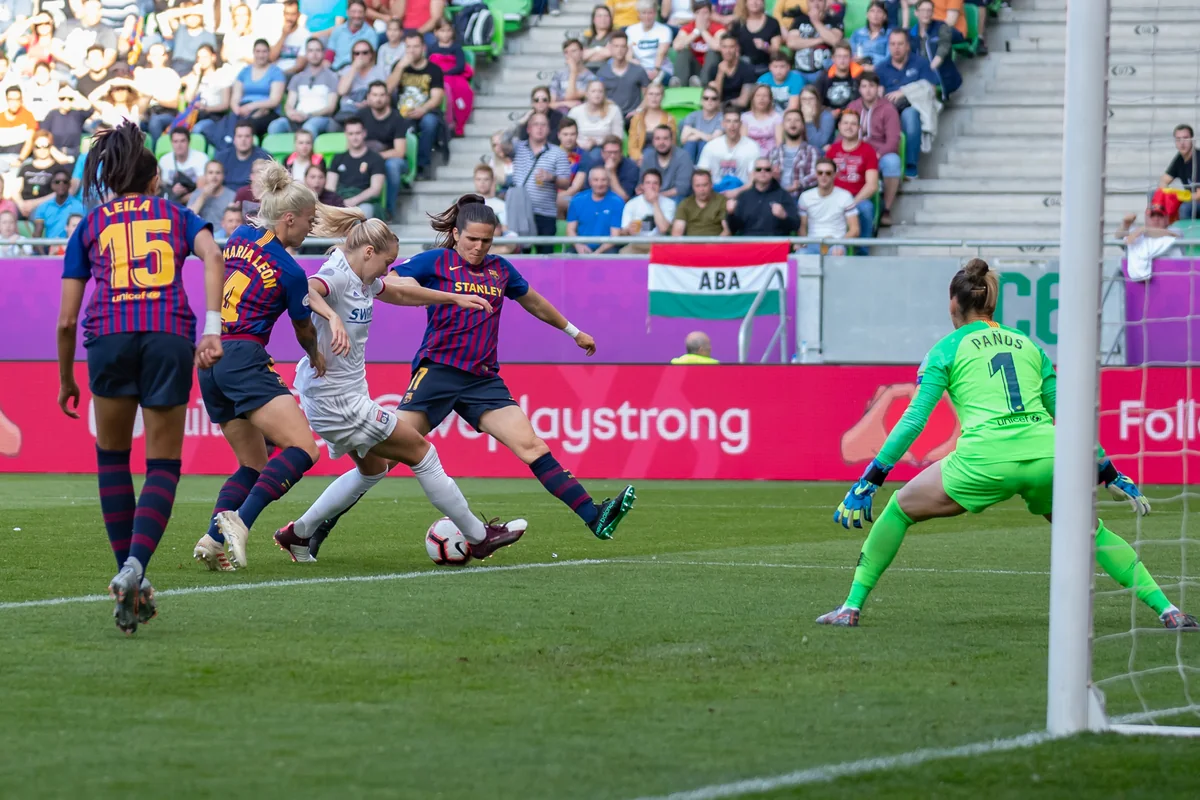
Photo: Steffen Prößdorf / Wikimedia Commons · CC BY-SA 4.0. Cropped, resized and converted to WebP. The prepared image versions retain the linked source license.